Sports»Escalade»Piolets»Piolets pour escalade»
Grivel
The North Machine Carbon
235,22 - 245,21 €
Disponible en stock
(4)

This article was produced in collaboration with Fabian (Instagram @foxonthe_rox).
Ice climbing is one of the most intense and rewarding disciplines of climbing. To ensure a safe and efficient day on the ice, careful preparation, the right gear choices, and an understanding of the conditions are key.
In this article, Fabian shares his best tips on how he prepares for ice climbing, what gear he uses, and what he pays attention to while on the ice.
Good preparation starts long before you step to the base of a frozen waterfall.
Fabian says he practices regularly either with wooden training tools or his actual ice axes – either at the climbing gym or on a plywood wall at home. Pull-ups, static hangs, and grip strength exercises help the body adapt to the specific demands of ice climbing.
Special focus is also placed on calf strength. Since most of the time is spent standing on the front points of the boots, it is important that the calf muscles have the strength and endurance needed. Before starting, it is essential to warm up properly. It is especially important to take care of shoulder and arm mobilization, light stretching of the calves and legs, and activation of the circulatory system.
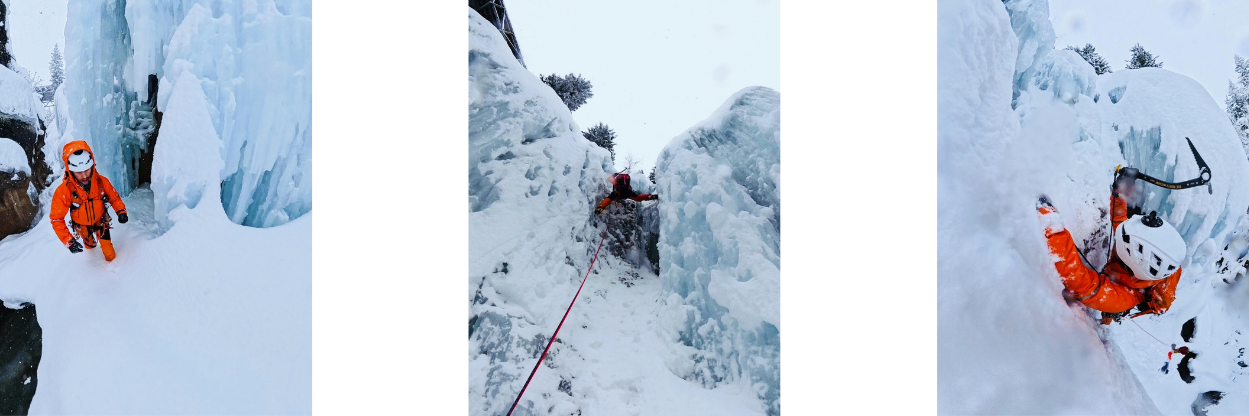
Fabian usually starts the day with an easy ice route to get a feel for the conditions.
Tip for beginners: An ice climbing garden is the perfect place for your first experience. For example, the Taschach Gorge offers great opportunities to try ice climbing on a top rope in a supervised environment.
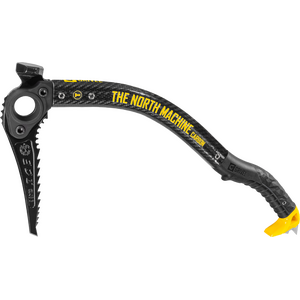
Fabian uses Grivel The North Machine Carbon axes. They are lightweight, precise, and versatile. Compared to more aggressive tools, they are slightly more moderate, making them ideal for both classic ice climbing, alpine routes, and north faces.
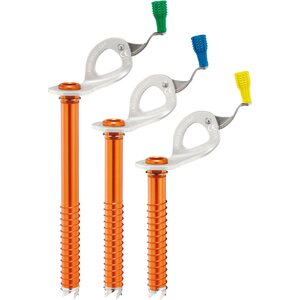
The gear typically includes 11 ice screws: The most common lengths are: ~13–16 cm (short) ~17–19 cm (medium) ~21–22 cm (long). The correct choice depends on the thickness and quality of the ice.

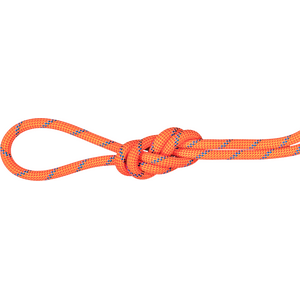
Fabian prefers Mammut's thin (approx. 7.5 mm) half ropes for reasons including: reduced rope friction on wandering routes, increased safety thanks to two ropes, longer rappels, and flexible rope management. In ice climbing, where the quality of protection points can vary, half ropes offer a clear safety advantage.
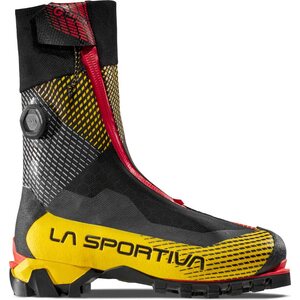
Fabian climbs with La Sportiva G-Tech boots. It is a lightweight and technical boot that offers excellent precision. However, it is not as warm as some other models from La Sportiva and other brands. If your feet get cold easily, a warmer model is definitely a better choice. It is also important to keep your hands warm with waterproof and insulated gloves.
Regarding clothing, Fabian relies on the layering principle. You should wear a technical base layer, an insulating mid-layer, a protective shell layer, and a thick down jacket for waiting at the belay station. Rule of thumb: Plan your clothing so that you don't get too hot while climbing, but stay warm while standing still.
Ice climbing requires constant vigilance and good judgment. Remember these:
The best season for ice climbing is usually between December and February, depending on location and altitude. Fabian specifically monitors: stable periods of frost, minimization of sun exposure, and steady temperatures. The best conditions often develop after long periods of frost when the temperature does not fluctuate drastically.
Ice climbing is a combination of preparation, experience, and respect for nature. By training purposefully, choosing your gear wisely, and carefully assessing the conditions, you will climb more safely and get the most out of every day on the ice.