Sporten»Kitesurfen»Vliegers en wings»Foil kiteboarden»Open-cell and single-skin kites»Explore»
Ozone
Explore V3 Kite Only 8m²
1 058,90 €
Direct beschikbaar
(1)

Especially in autumn, as winter approaches, we receive numerous enquiries about choosing the right snowkite. The first snowfall marks the beginning of another exciting season for winter outdoor enthusiasts.
The popularity of outdoor activities and adventures has been steadily growing, and snowkiting could well become one of the fastest-growing and most popular winter sports in the coming years. This guide focuses primarily on choosing kites specifically designed for snowkiting, commonly known as foil kites.
Snowkiting is a fantastic way to explore winter landscapes and enjoy the great outdoors. Frozen lakes, open mountain plateaus, treeless terrain and snow-covered fields all offer excellent opportunities for snowkiting when conditions are safe. You do not necessarily need to travel to the mountains or a dedicated ski resort. Even a relatively small frozen lake or an open snow-covered field can offer excellent snowkiting conditions, provided the wind is blowing from a suitable direction.
Snowkiting is one of the easiest forms of kiting to learn. When starting in winter, you mainly need to learn how to handle the kite, provided you already have some basic skiing or snowboarding skills. Snowkiting is also generally slightly more affordable to get into than kitesurfing on water. Foil kites designed for winter use tend to be less expensive than comparable inflatable kitesurfing kites.
I strongly recommend that you always start with a snowkiting course or at least under the guidance of someone experienced in the sport. A course will provide you with the knowledge and skills needed to practise independently. Trying to learn entirely on your own can become an expensive mistake if you damage your equipment or, worse still, injure yourself. A snowkite is not a toy. Cursussen
Once you have been introduced to the sport through a course or with the help of a friend, the next step is to purchase your first set of equipment. The biggest questions are almost always the same: what features should my kite have, and what size do I need? Start by identifying your needs and the conditions in which you will most frequently be riding. Will you mainly be snowkiting on frozen lakes in light winds? Are you planning to head into windy mountain terrain as well? Perhaps you would also like to get into kitesurfing on water at some point?
The first decision is the type of kite: an inflatable kite or a foil kite?
If you intend to focus exclusively on winter kiting, a foil kite is usually the preferred choice. Foil kites are often slightly more affordable, harder to damage and offer practical advantages for winter use. Many snowkiting foil kites feature excellent depower capabilities and safety systems. If you dream of future kite touring adventures, snowkiting in the mountains or using a kite as your personal ski lift for backcountry skiing, a foil kite is an excellent choice. Foil kites pack down smaller and do not require an inflatable supporting structure. Traditional foil kites consist of cells formed by two layers of fabric and internal fabric walls. The air inside these cells, together with the bridle lines, maintains the shape of the kite.
Inflatable kites are also suitable for snowkiting. Their greatest advantage is their versatility, as they can be used on both snow and water. Inflatable kites feature an air-filled supporting structure and are suitable for use on land, snow and water. This structure must be inflated with a pump before use. Inflatable kites are also very stable.
The next consideration is kite size. When choosing the right size, take into account your body weight and the wind conditions in which you will primarily be using the kite. Smaller kites are naturally better suited to stronger winds, while larger kites are needed in lighter conditions. You can get started with just one kite, but most active snowkiters typically own a couple of different sizes.
Your first kite is usually an all-round kite suitable for a wide range of wind conditions and terrain. For an adult rider weighing 70–90 kg (154–198 lbs), an all-round snowkite size is often approximately 10 m². Depending on the kite model and riding conditions, this may cover winds ranging from around 3–4 m/s to nearly 10 m/s (6–19 knots). The actual suitable wind range depends on the rider's weight, skill level, kite design and the amount of friction on the surface, whether snow or ice. Always refer to the manufacturer's recommended wind range and choose conditions appropriate to your skill level.
I would go as far as to say that Ozone manufactures some of the best and safest snowkites in the world.
Ozone's all-round winter kite is the Ozone Explore: a single-skin kite and your personal backcountry ski lift. Instead of a traditional double-skin foil construction, it features a simple, easy-to-use single-skin design. It is particularly well suited to relaxed freeriding on snow, uphill travel and kite touring. An excellent alternative to a ski lift for backcountry skiing.
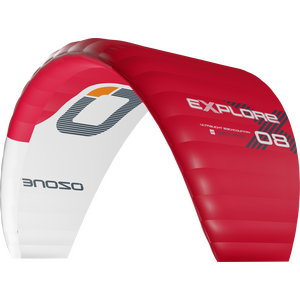
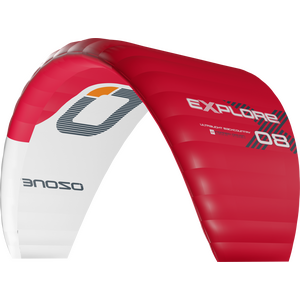
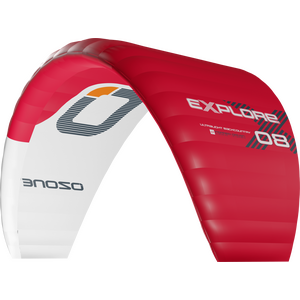
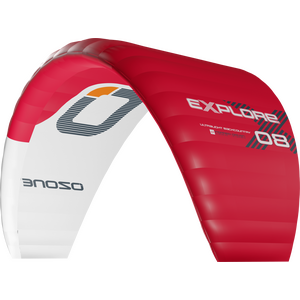
Ozone EXP: A high-performance open-cell foil kite designed for expert riders and expeditions.


A harness allows you to attach the kite to your body. The kite's chicken loop connects to the harness, transferring the pulling force to your core rather than your arms. Some of the best harnesses on the market designed specifically for snowkiting are:
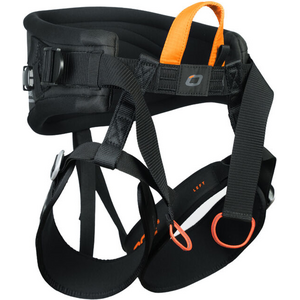
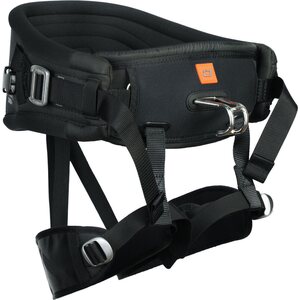
You will also need a pair of alpine skis or a snowboard, suitable skiing or snowboarding clothing and, of course, a helmet.
I first got into snowkiting in 2011, after experiencing several properly snowy winters in a row. I had just moved to a new city and, quite frankly, the nearby ski resorts and their relatively short runs did not particularly appeal to me. Still, my old alpine skis were sitting in the basement, waiting to be used. So I decided to buy a trainer kite and spent a few sessions practising kite handling on my own. After that, I went out with a colleague who had been snowkiting for several years to try a full-sized kite for the first time.
I was hooked almost immediately. After my first few runs, I managed to ride a few hundred metres across the wind, turn around and return to exactly where I had started. The sun was shining, and I could see my own ski tracks in the snow. My immediate thought was that this was several times more enjoyable than downhill skiing. The most tedious part of skiing – standing or sitting on a lift and freezing – was gone. There was also no need to rent a car, drive to a ski resort, buy lift passes, queue for lifts or dodge dozens of other skiers during a short descent, only to end up freezing on the lift again.
The next step was to get my own equipment straight away. I decided to buy an inflatable kite from the outset because I knew I eventually wanted to get into kitesurfing as well. I spent almost all of my first two seasons snowkiting. I learned how to handle the kite, developed the necessary skills and gained confidence in my abilities. After a couple of winters, I felt ready to venture out onto the water. Kiting and kite sports quickly became my favourite year-round outdoor activity.
1. Always get started with proper instruction.
2. Consider your needs and choose equipment that suits your style of riding. If you are unsure, ask us or other experienced snowkiters for advice.
3. Get outdoors.
4. Enjoy.
Kitesurfing and Snowkiting: Buyer's guide Learn to snowkite videos

